Becoming One Body: How the Mass Begins
Renewed at the Table of the Lord
The Seasons of Our Lives in Christ
The Introductory Rites conclude with the Collect, also called the Opening Prayer. After a brief moment of silence, a time for us to gather our personal intentions, the priest prays on behalf of the entire assembly, collecting all our prayers into one, a reminder that we are not isolated individuals. As one, unified body, our prayers rise together to the Father.
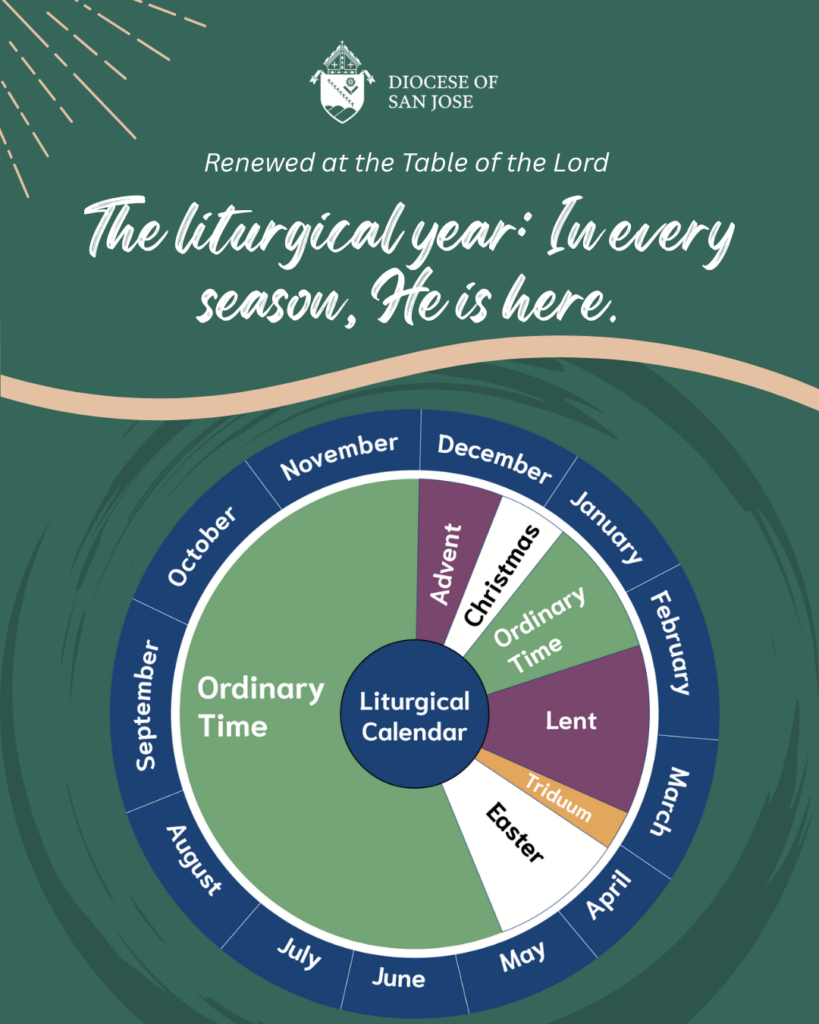
But there is something else important about the Collect: it changes throughout the year. The prayers reflect the liturgical season. During the Easter season, the prayers proclaim Christ’s resurrection and our new life in Him. During Advent, they help us prepare for His coming. In Lent, they call us to conversion. In Ordinary Time, the prayers guide us in living out our baptismal call day by day.
This is the beauty of the Liturgical Year, it forms a divine rhythm—Advent, Christmas, Lent, Easter, Ordinary Time—that mirrors the seasons of nature and our own lives. Times of preparation. Times of celebration. Times of beginnings, growth, death, and resurrection. Notice, too, how the Gloria disappears during Advent and Lent, seasons of waiting and penance. Then it returns on Christmas and Easter with even greater joy. The liturgical year teaches us to trust God’s timing, knowing He is present in every season of our lives.
Over these past weeks, we have journeyed together through the opening moments of the Mass. We have learned that our participation matters, that music is prayer, and that unity in worship strengthens our mission. When we come to Mass with humility, honesty, and trust in the Lord, we open ourselves to God’s transformative grace, and we are sent forth by God, having been renewed, ready to bring Christ’s love to the world.
As we continue our liturgical renewal, let us always remember what we have learnt about those early moments of the Mass. Let the mystery of Christ’s action in gathering his people take root in your heart. We might be tempted to rush through familiar words and gestures, but if we pause, we see they are the liturgy’s first moments of encounter—pointing us toward the greatest encounter of the Mass: Christ in the Eucharist. All of us were chosen to be there on that day, for a reason: Christ has something he wants to tell each of us personally. May we be renewed, truly Renewed at the Table of the Lord, now and always.
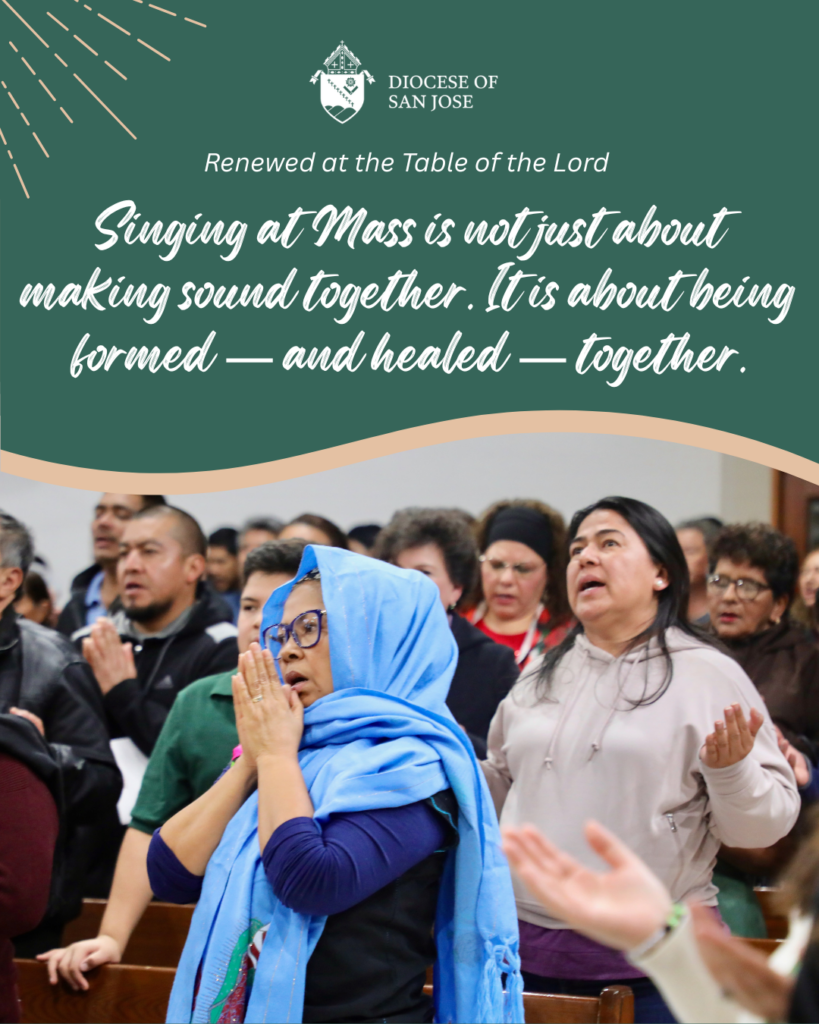
The Mass does not begin when the priest reaches the altar. It starts at the moment we walk through the church doors and even before, as we prepare our hearts at home. The entrance procession gathers us into one body and prepares us to hear God’s word and receive His Body and Blood. Those who process in, the altar servers, the deacons, and finally the priest in persona Christi, do so on behalf of the whole assembly, because the liturgy is always the action of the whole Church.
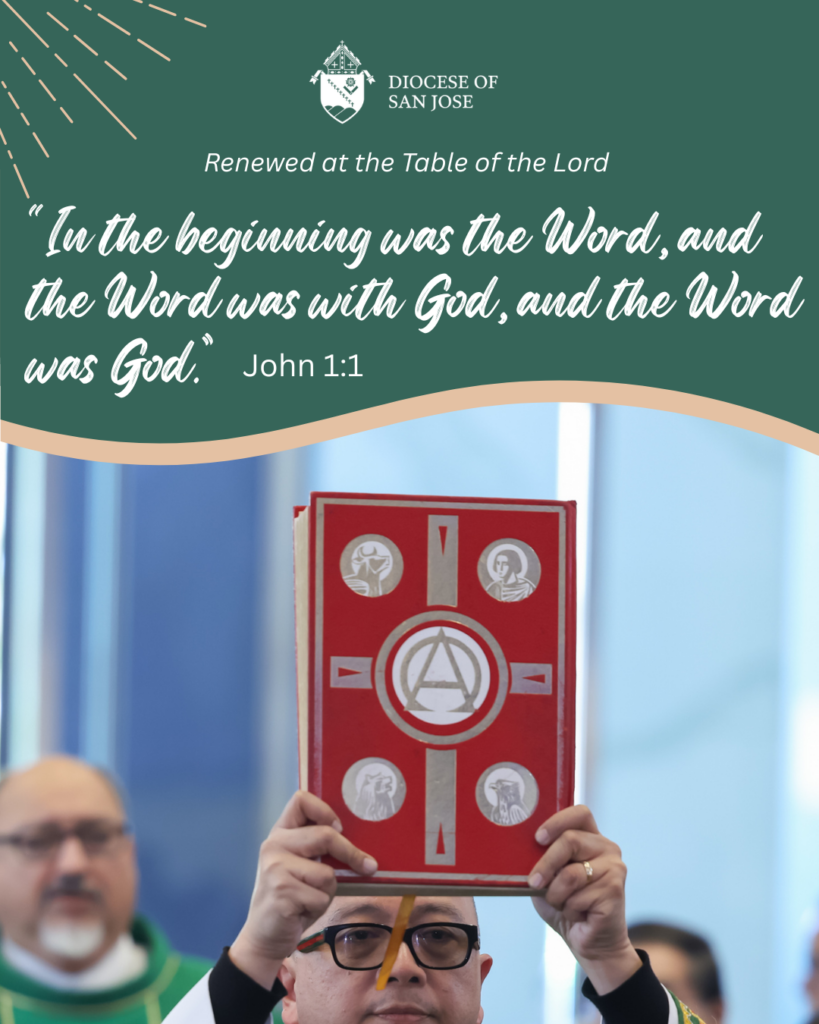
The entrance procession is rich with meaning. The crucifix, the cross bearing the body of Christ, leads the way, inviting all to follow him to the altar of sacrifice and resurrection. Two candle bearers follow, and their flames symbolize the Light of the World, Jesus Christ. Most significantly, the Book of the Gospel is carried with dignity and reverence, held high for all to see. This is not just any book. Every word IS Christ. As John 1:1 states: “In the beginning was the Word, and the Word was with God, and the Word was God.” When the deacon or lector carries the Book of the Gospel in procession, they carry Christ Himself.
As the procession moves through the church, we sing the gathering song. This is the first time in the Mass where the assembly joins as one voice. It is the sound of all people gathered by the Lord from different parts of the community, with all their joys and burdens, united in one act of worship. Even if you think you cannot sing, your voice matters. Saint Paul reminds us that every part of the Body is important (1 Cor. 12). The Church needs to hear you praising God.
At the end of the procession, the priest reverences the altar with a kiss. This ancient gesture shows honor to the sacrifice of Christ so that we may have eternal life. These opening moments—the procession, the reverence, the gathering song—transform us from a group of individuals into the Body of Christ, united in worship.
This week, pay attention to how the Mass begins. Notice the crucifix, the candles, and the Book of the Gospel. Join in the entrance song with full voice. Feel yourself becoming part of something much larger than yourself—the family of God, gathered at the table of the Lord.
Renewed at the Table of the Lord
Our Voices United in Prayer: Music as Ministry
Have you ever thought to yourself the following: “I cannot sing,” “I do not feel like singing,” “I do not know the songs,” or “someone else will sing”? If so, you are not alone. But here is the truth: the Church has long recognized that singing lifts the human heart toward God. In fact, singing forms us. It is one way of expressing what we were created for: to worship God. This is not about talent: God does not ask us to be professional singers. He asks us to be prayerful ones!
Liturgical Music differs from what is used in entertainment. It is not a performance or concert we attend, rather it’s something that opens us to God’s grace. For the Church, music is a ministry, a vocation. Dedicated musicians often spend many hours preparing and sharing their God-given talents to lead the assembly in making a joyful noise to the Lord. When the assembly joins together in song, we act as one Body, uplifting one another in praise and worship of God. When we sing together, we are praying twice, as St. Augustine taught.
How else can we think about the importance of singing at Mass? Think about it this way: when your family gathers for a birthday, does only one person sing Happy Birthday? No, everyone joins in, even those who cannot carry a tune! We sing together because we are together, celebrating together. Mass is no different. We sing because we are family, gathered to celebrate the greatest gift of all: the Eucharist.
Music ministers — our choirs, cantors, and musicians — have an important role: they lead and invite us to lift our voices to the Lord together in song and prayer. When you hear the cantor begin a song, they are saying, “Come, join me. Let us pray together.” Your response is needed. Your voice, however humble, belongs in the song of the Church.
This week, commit to singing at Mass! Arrive early and look at the music listed in your worship aid. Take a deep breath as the entrance song starts, and just begin, do not overthink it. Remember that God delights in hearing His children sing, and so does your parish family. Together, let us make a joyful noise to the Lord (Psalm 100:1).
Asking for Mercy, Giving Praise
After the entrance song, the priest, in persona Christi, greets the assembly with “The Lord be with you.” This is not a pleasantry; it is a declaration: Christ is truly present among us. The phrase echoes through Scripture: the angel’s greeting to Mary at the Annunciation, what Boaz says to his harvesters in Ruth, the Risen Christ’s words to the disciples in the upper room, and so on. When the assembly answers, “And with your spirit,” we acknowledge that the priest is not simply a man greeting us, but that the Spirit of God, received at his ordination, is acting through him. In this exchange, the whole theology of the Mass is expressed: Christ is here, his Spirit is at work, and we are about to encounter Him together.
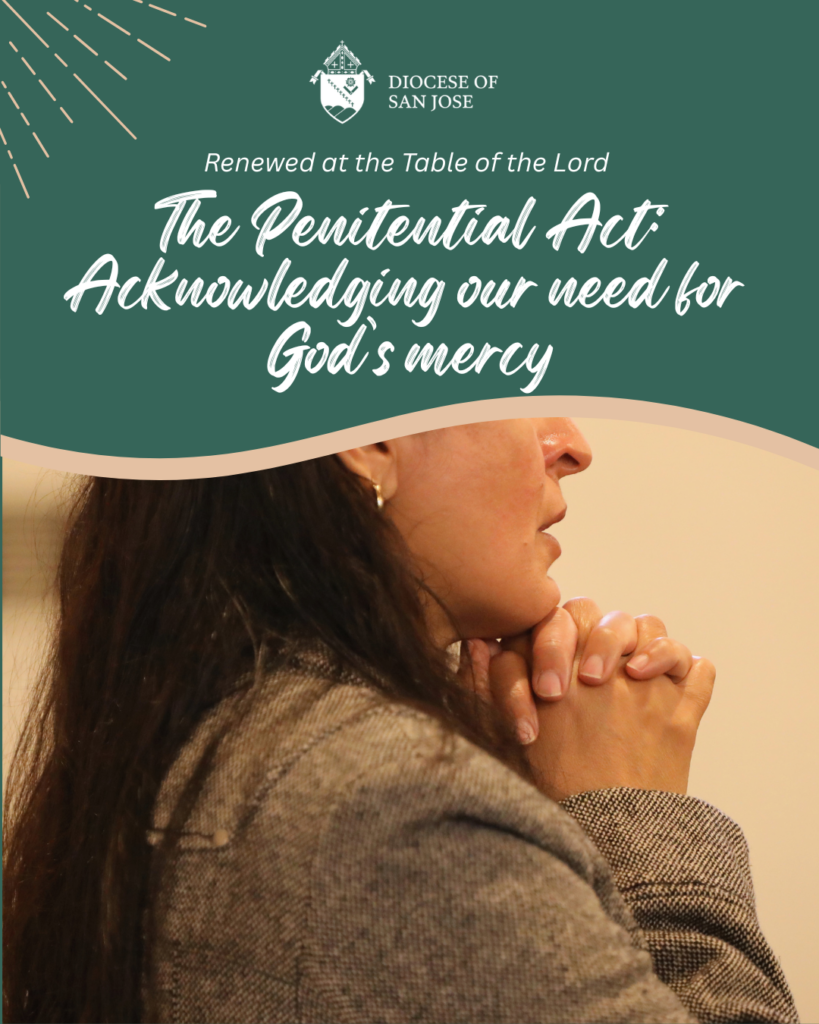
Then, we come to a profound moment: the Penitential Act. This is when we, as a community, acknowledge our need for God’s mercy. We come before the Lord, not pretending to be perfect, but humbly admitting that we are sinners in need of grace. This is not just reciting words; it is naming the truth about ourselves: that we are beloved children of God who fall short, hurt others, and fail to love as we should. In doing so together, we receive the communal assurance that we are never alone in our need.
The form of the Penitential Act may vary from Sunday to Sunday. You might recognize the Confiteor — “I confess to almighty God…” — prayed together as a community. Another form invites a brief examination of conscience led by the priest. A third prays the Kyrie: “Lord, have mercy / Christ, have mercy.” The form changes; the grace does not.
On most Sundays, after acknowledging our sinfulness, we shift to praise with the Gloria. This ancient hymn has been prayed by Christians for nearly two thousand years. It bursts with joy: “Glory to God in the highest, and on earth peace to people of good will!” From confession to praise, this is the rhythm of the Christian life. We acknowledge our need, receive God’s mercy, and then overflow with gratitude.
This week, notice the Greeting and receive it as the declaration it is: Christ is truly here. Enter the Penitential Act with a willing heart. And when the Gloria comes, let it pour out of you, because you have just been met with mercy.